Best Compact Espresso Machine for Small Kitchens: 4 Top Picks
Quick Answer
For a small kitchen, the best compact espresso machine is one that fits your counter without sacrificing the features you need. Focus on footprint first, then decide if you want a built-in grinder or a manual frother. The DeLonghi Stilosa and CASABREWS CM5418 are great space-saving options, while the Breville Barista Express packs a grinder into a slightly larger frame.
Why This Happens
Small kitchens create a unique challenge: you want café-quality espresso, but you do not have room for a massive machine. Most full-size espresso machines are over 12 inches wide and 15 inches deep, which can dominate a countertop. Compact models solve this by shrinking the chassis, but they often make trade-offs. Some have smaller water tanks, fewer features, or require more manual steps. The key is to identify which trade-offs you can live with. If you drink multiple espressos a day, a small water tank might mean frequent refills. If you love lattes, a weak steam wand could be frustrating. Understanding these compromises helps you choose a machine that truly fits your routine, not just your counter.
How to Fix It
-
Measure your space first. Before you shop, measure the width, depth, and height of your available counter area. Leave at least 2 inches of clearance on all sides for ventilation and access. Also consider the height of your upper cabinets—you need room to pour beans and remove the water tank.
-
Decide on a grinder strategy. A built-in grinder saves space but adds to the machine’s size and cost. If you already have a grinder, a machine without one can be much smaller. If not, a compact manual grinder can be stored in a cabinet.
-
Choose your milk frothing method. A steam wand gives you silky microfoam but takes practice. A panarello wand is easier for beginners but produces larger bubbles. Some machines include a frothing pitcher, but you can also use a separate handheld frother.
-
Consider a manual or semi-automatic machine. Fully automatic machines with built-in grinders are convenient but often bulkier. Manual and semi-automatic models are typically smaller and give you more control.
-
Free up counter space. If you are tight on room, use a rolling cart or a wall-mounted shelf to hold your espresso machine. You can also store cups and beans in a cabinet to keep the area clear. This costs nothing and can make even a small machine feel more spacious.
Products That Help
CASABREWS CM5418 Compact Espresso Machine with Milk Frothing Steam Wand

This is a compact semi-automatic machine designed for small spaces. It has a 15-bar pressure pump and a steam wand for frothing milk. The compact footprint makes it a good fit for tight counters.
Pros:
- Very compact, easy to fit in small kitchens.
- Steam wand allows you to froth milk for lattes and cappuccinos.
- Simple controls, good for beginners.
Cons:
- Water tank is small, so you may need to refill often.
- The steam wand can be a bit slow for multiple drinks.
DeLonghi Stilosa Compact Manual Espresso Machine with Manual Milk Frother
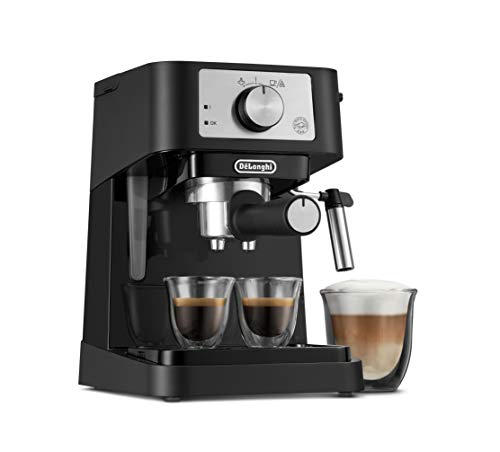
The DeLonghi Stilosa is a popular entry-level compact machine. It uses a manual milk frother (panarello style) and has a 15-bar pump. It is known for being straightforward and space-efficient.
Pros:
- Very small footprint, often under 8 inches wide.
- Easy to use, great for beginners.
- Affordable compared to many other espresso machines.
Cons:
- The manual frother produces foam but not as fine as a steam wand.
- No built-in grinder, so you need a separate one.
Breville BES870XL Barista Express Espresso Machine Brushed Stainless Steel
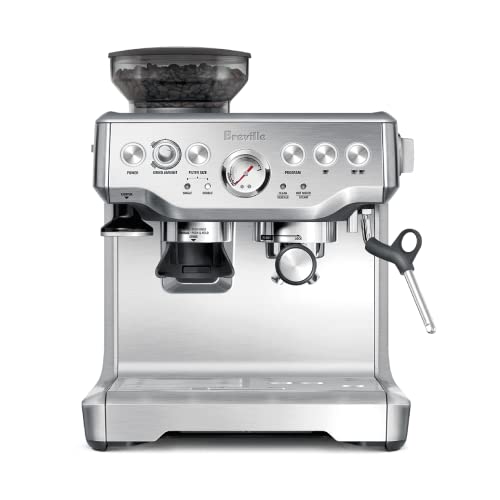
The Breville Barista Express is a step up. It includes a built-in conical burr grinder, so you grind beans fresh for each shot. It is larger than the other two but still fits on many counters. The brushed stainless steel finish looks sleek.
Pros:
- Built-in grinder saves space and ensures fresh coffee.
- PID temperature control for consistent shots.
- Powerful steam wand for excellent microfoam.
Cons:
- Larger and heavier than the other models.
- Higher price point.
- Requires a bit of a learning curve.
Breville BES870BTR Barista Express Espresso Machine Black Truffle
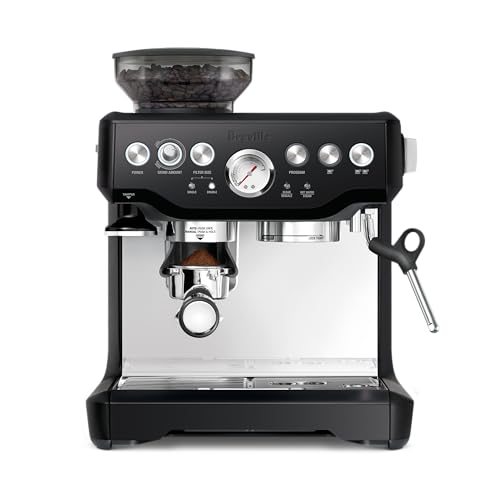
This is the same machine as the BES870XL but in a black truffle finish. It offers the same features: built-in grinder, PID control, and a strong steam wand. If you prefer a darker appliance, this is the one to consider.
Pros:
- All the features of the stainless steel version.
- Black finish may hide smudges better.
- Built-in grinder and steam wand for complete espresso setup.
Cons:
- Same larger footprint as the stainless steel model.
- Premium price.
What to Look For
- Footprint: Measure your counter and check the machine’s dimensions. Remember to account for clearance to remove the water tank and access the portafilter.
- Water tank capacity: Smaller tanks mean more refills. If you make multiple drinks daily, look for at least 30-40 oz.
- Milk frothing: A steam wand gives better microfoam but takes practice. A panarello is easier but less refined.
- Grinder: Built-in grinders save space but add size and cost. If you have a separate grinder, you can choose a smaller machine.
- Pressure: Look for at least 15 bars. Most modern machines have this, but it is a good baseline.
- Ease of cleaning: Removable drip tray and water tank make cleanup easier. Check if the portafilter and baskets are dishwasher-safe.
FAQ
What is the smallest espresso machine with a milk frother?
The DeLonghi Stilosa is one of the most compact models with a manual milk frother, often measuring under 8 inches wide. The CASABREWS CM5418 is also very compact and includes a steam wand for frothing.
Can a compact espresso machine make good espresso?
Yes. Many compact machines use the same 15-bar pressure systems as larger models. The key is fresh beans, a good grinder, and proper tamping. Some compact machines have pressurized baskets that make it easier to get consistent results.
Do I need a grinder for a compact espresso machine?
If you want the freshest flavor, yes. Some machines like the Breville Barista Express have a built-in grinder, saving counter space. Others require a separate grinder, which adds to the footprint.
How much counter space do I need for a compact espresso machine?
Most compact models need about 6 to 10 inches of width and 12 to 15 inches of depth. Always check the dimensions, and remember you need clearance to remove the water tank and access the portafilter.
Are compact espresso machines hard to clean?
They are generally easy to clean. Most have removable drip trays and water tanks. Regular descaling is important, especially if you have hard water. Check the manual for the recommended descaling frequency.
What is the best compact espresso machine for beginners?
The DeLonghi Stilosa is often recommended for beginners because it is simple to use and affordable. The CASABREWS CM5418 is also beginner-friendly with its steam wand and compact design.