Is This Grind Fine Enough for Espresso? How to Tell and Fix It
Quick Answer
The most reliable way to tell if your grind is fine enough for espresso is to pull a shot and time it: a proper espresso shot should take 25–30 seconds to yield about twice the weight of your coffee dose (e.g., 18g in, 36g out). If your shot runs faster than 20 seconds and tastes sour or thin, your grind is too coarse—adjust finer. If it takes longer than 35 seconds and tastes bitter or dry, it’s too fine. Use these signs to guide your grinder adjustments.
Why This Happens
Espresso is a high-pressure brewing method that forces hot water through a compacted bed of finely ground coffee. The grind size controls how quickly water flows through that bed. If the particles are too large (coarse), water rushes through, under-extracting the coffee and leaving it sour and weak. If the particles are too small (fine), water struggles to pass, over-extracting and creating a bitter, harsh shot.
Several factors can make you question your grind:
- Grinder limitations: Not all grinders can produce a true espresso grind. The Solis Barista Perfect and Graef CM500 are capable, but they may need recalibration or a finer setting than expected.
- Bean freshness: Older beans or dark roasts can behave differently, requiring a finer grind to achieve the same resistance.
- Dose and tamp: If you’re using too little coffee or tamping unevenly, even a perfect grind can yield a bad shot.
- Machine pressure: Machines that don’t reach 9 bars of pressure may never produce a proper espresso extraction, regardless of grind.
Understanding these variables helps you isolate whether the grind is truly the issue.
How to Fix It
-
Adjust your grinder one step finer and pull a test shot. This is the most direct fix. Make small changes—one or two clicks—and observe the shot time and taste. On the Solis Barista Perfect, turn the dial while the grinder runs to avoid jamming. On the Graef CM500, use the adjustment ring. Keep notes on setting vs. shot time.
-
Use a scale to measure dose and yield. A cheap kitchen scale (0.1g resolution) is a game-changer. Weigh your coffee before brewing (e.g., 18g) and weigh the espresso output. Aim for a 1:2 ratio in 25–30 seconds. This removes guesswork and tells you exactly how the grind affects flow.
-
Check your tamp and distribution. An uneven tamp or clumpy grounds can cause channeling, making a fine grind seem too coarse. Level the grounds before tamping and use a consistent pressure (about 15–20 kg). This costs nothing but practice.
-
Try a different coffee. Very fresh beans (less than 5 days off roast) can be gassy and require a coarser grind, while older beans may need finer. If you’re at the finest setting and the shot still runs fast, try a different bag—ideally one roasted for espresso.
-
Upgrade your grinder if you’ve maxed out. If your grinder can’t go fine enough, or produces inconsistent particles, a better grinder is the long-term solution. The Breville Barista Express has a built-in conical burr grinder with espresso-specific settings, and the CASABREWS CM5418 is a compact machine that pairs well with a separate espresso grinder.
Products That Help
Espresso Machine with Grinder and Frother 30 Grind Settings 20 Bar
 This all-in-one machine includes a burr grinder with 30 settings, giving you a wide range to dial in espresso. The 20-bar pump provides ample pressure for proper extraction. If your current setup can’t grind fine enough, this is a cost-effective upgrade that eliminates the guesswork.
Pros:
- Integrated grinder with 30 settings for fine-tuning
- 20-bar pressure for consistent espresso extraction
- Includes milk frother for lattes and cappuccinos
Cons:
- Grinder may not match the precision of standalone espresso grinders
- 20 bars is more than needed; optimal is 9 bars, but it works
Breville BES870XL Barista Express Espresso Machine Brushed Stainless Steel
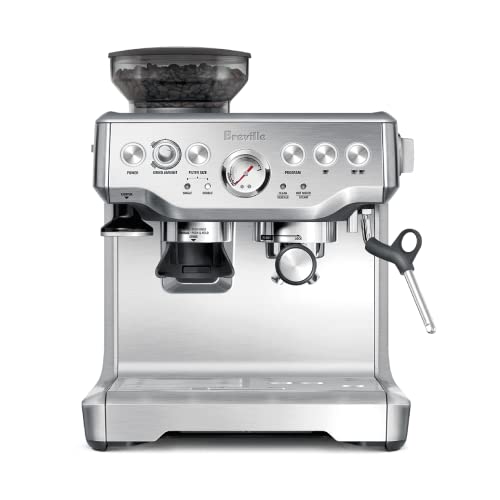 A favorite among home baristas, the Barista Express has a built-in conical burr grinder with espresso-specific settings and a pressure gauge to help you dial in. It’s an excellent choice if you want to learn and perfect your grind without buying separate equipment.
Pros:
- Built-in conical burr grinder with fine espresso settings
- Pressure gauge helps you see if grind is correct
- PID temperature control for consistent shots
Cons:
- Grinder adjustments are stepped, not stepless
- Takes practice to master
Breville BES870BTR Barista Express Espresso Machine Black Truffle
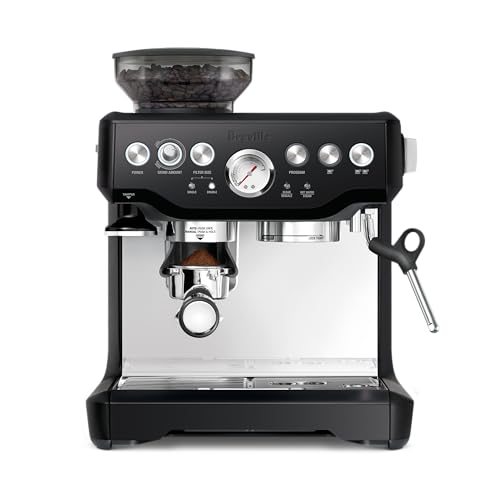 Same reliable performance as the BES870XL, but in a sleek Black Truffle finish. If you’re troubleshooting grind size, this machine’s integrated grinder and pressure gauge make it easy to see when you’ve hit the sweet spot.
Pros:
- Identical features to the BES870XL
- Attractive black truffle color
- Built-in grinder and pressure gauge
Cons:
- Same stepped adjustment as other Barista Express models
- Premium price for the color variant
CASABREWS CM5418 Compact Espresso Machine with Milk Frothing Steam Wand
 This compact machine is a solid choice if you already have a good grinder and just need a reliable espresso maker. It delivers 20 bars of pressure and includes a steam wand for milk frothing. Pair it with a quality burr grinder to control grind size precisely.
Pros:
- Compact footprint for small kitchens
- 20-bar pressure for espresso extraction
- Steam wand for milk-based drinks
Cons:
- No built-in grinder, so you’ll need a separate one
- Basic temperature control
What to Look For
- Burr grinder: Conical or flat burrs produce consistent particles; blade grinders are a no-go for espresso.
- Fine adjustment range: Look for a grinder with many steps or stepless adjustment, especially in the espresso range.
- Pressure gauge: A machine with a pressure gauge helps you see if your grind is creating the right resistance.
- Dose control: A scale (0.1g) is essential for measuring coffee in and espresso out.
- Fresh beans: Use coffee roasted for espresso and within 2–4 weeks of roast date for best results.
- Machine pressure: Aim for a machine that delivers 9 bars of pressure (many advertise 15 or 20 bars, but 9 is ideal at the group head).
FAQ
How do I know if my grind is too coarse for espresso? If your shot pulls in under 20 seconds and tastes sour or watery, the grind is likely too coarse. Espresso should take about 25–30 seconds for a 1:2 ratio (e.g., 18g coffee in, 36g out).
What if my grind is too fine? If the shot takes longer than 35 seconds, drips slowly, or tastes bitter and dry, the grind is too fine. Adjust one step coarser and try again.
Can I use a blade grinder for espresso? No, blade grinders produce inconsistent particles that lead to channeling and poor extraction. A burr grinder is essential for espresso.
How do I adjust the Solis Barista Perfect grinder? Turn the grind adjustment dial while the grinder is running. Make small changes (1–2 steps) and pull a shot to test. The Solis has numbered settings; lower numbers are finer.
Why does my espresso shot start fast then slow down? This indicates channeling, often caused by an uneven grind or poor distribution. Ensure your grind is consistent and use a WDT tool or leveler to distribute grounds evenly.
Do I need a special espresso machine to test grind size? Any espresso machine that can produce 9 bars of pressure will work. However, machines with a pressure gauge and pre-infusion, like the Breville Barista Express, make dialing in easier.