Why Does My Litter Box Smell So Bad? Causes and Fixes
Quick Answer
A smelly litter box usually means one of three things: waste isn’t being removed often enough, the litter isn’t neutralizing odor effectively, or the box itself has absorbed smells over time. The most effective fix is a combination of daily scooping, a full litter change every 2–4 weeks, and using a quality odor-absorbing litter or deodorizer. If the smell persists, deep clean the box or replace it.
Why This Happens
Cat urine is concentrated and contains ammonia, which has a strong, pungent smell. When urine sits in the litter, bacteria break it down and release more ammonia over time. Even if you scoop daily, tiny urine particles can remain, especially if the litter doesn’t clump tightly.
Here are the main reasons a litter box smells bad:
- Infrequent scooping: Waste left for more than a day starts to decompose and release odors.
- Not enough litter: Too little litter means urine reaches the bottom of the box and soaks into the plastic.
- Old litter: Even clumping litter loses its odor-fighting ability after a few weeks. The whole box needs a fresh start.
- Dirty box: Plastic scratches over time and harbors bacteria. A box that’s been used for months may smell even after cleaning.
- Covered box trap: Covered boxes contain odors but also concentrate them. Without frequent cleaning, they can become smellier than open boxes.
- Health issues: Sometimes strong odor indicates a urinary tract infection or other medical problem. If the smell is unusually foul or your cat strains to urinate, consult your veterinarian.
How to Fix It
Here are practical approaches, ranked from easiest and most effective to more involved.
1. Scoop at least once a day (free)
This is the single most important habit. Remove solid waste and urine clumps every day, ideally twice a day. The longer waste sits, the more it smells. Use a sturdy scoop and dispose of waste in a sealed bag.
2. Do a full litter change and clean the box regularly (low cost)
Every 2–4 weeks, empty the entire box, wash it with mild soap and warm water, and let it dry completely. Avoid harsh chemicals like bleach, which can irritate your cat’s paws and respiratory system. If the box still smells after washing, it may be time to replace it—plastic can absorb odors permanently.
3. Use an odor-absorbing litter or deodorizer (small investment)
Some litters are formulated with activated charcoal or baking soda to neutralize odors. You can also add a litter deodorizer powder or crystals to your existing litter. These products are designed to break down odor molecules and keep the box fresher between full changes. See the Products That Help section below for specific options.
4. Choose the right litter box and location (varies)
An uncovered box with high sides offers good ventilation and contains scatter. Covered boxes can help with odor containment but require more frequent cleaning. Place the box in a well-ventilated area, away from food and water. If you have multiple cats, provide one box per cat plus one extra.
5. Consider your cat’s diet and health (free to vet visit)
A high-quality diet can lead to less pungent waste. If odor is extreme despite good cleaning habits, talk to your vet—it could signal a health issue like a UTI or kidney problem.
Products That Help
Nature’s Miracle Cat Litter Box Odor Deodorizer Powder, 20 oz

This is a powder you sprinkle into the litter to neutralize odors on contact. It’s specifically designed for litter boxes and helps control ammonia and other unpleasant smells. It’s easy to use: just add a scoop to the litter and mix.
Pros:
- Works quickly to neutralize odors
- Safe for use around cats when used as directed
- Unscented or lightly scented options available
Cons:
- Requires regular reapplication
- Some cats may be sensitive to powders
Rocco & Roxie Litter Box Odor Eliminator, 12 oz

This is an enzymatic odor eliminator that breaks down odor-causing molecules rather than just masking them. It’s suitable for use in litter boxes and around the home. You can spray it on the box after cleaning or use it as a litter additive.
Pros:
- Enzymatic formula targets the source of odors
- Can be used on surfaces and in litter
- Helps with lingering smells in the box itself
Cons:
- Spray application may require more frequent use
- Some cats may dislike the scent
Fresh Step - Cat Litter Deodorizer, Litter Box Crystals, Fresh Scent, 15 oz

These crystals are designed to be mixed into cat litter to absorb moisture and neutralize odors. They help extend the life of your litter and keep the box smelling fresher for longer. The fresh scent is mild and not overpowering.
Pros:
- Crystals absorb liquid and odor
- Helps litter last longer
- Easy to mix into any litter
Cons:
- Scent may be noticeable to some cats
- Needs regular addition with litter changes
ARM & HAMMER Cat Litter Deodorizer-Super Size Pack-30 oz Pack of 4
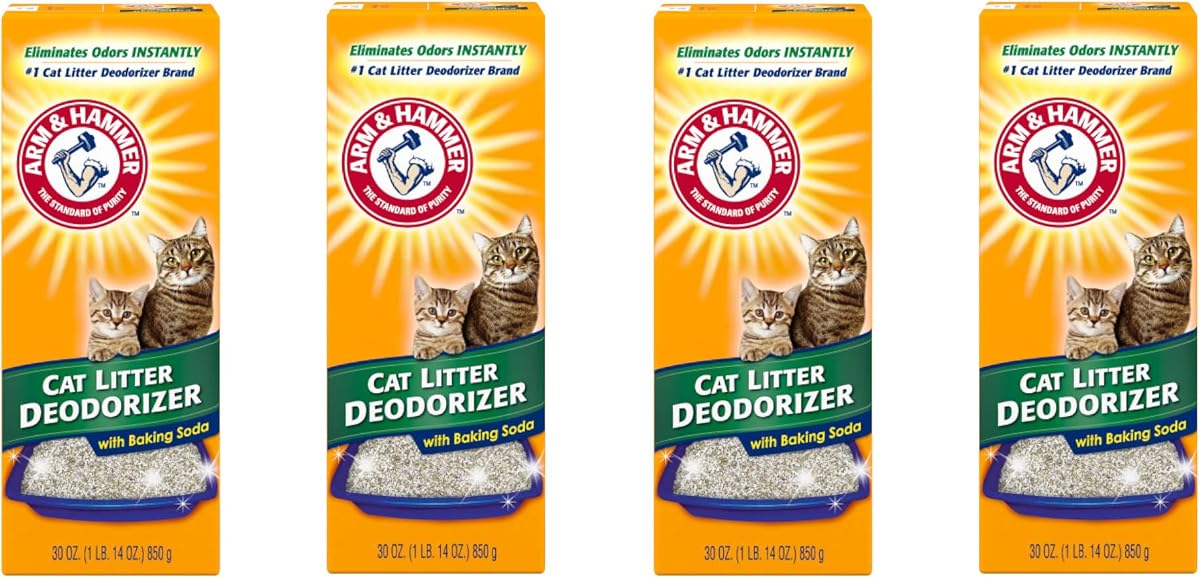
This is a bulk pack of ARM & HAMMER’s popular litter deodorizer. It uses baking soda to neutralize odors and is a cost-effective option for multi-cat households. You sprinkle it into the litter and mix.
Pros:
- Baking soda is a proven odor neutralizer
- Bulk pack offers good value
- Unscented and safe for most cats
Cons:
- Requires consistent use
- May not be enough for severe odors
What to Look For
When choosing products to combat litter box odor, keep these points in mind:
- Enzymatic vs. masking: Enzymatic cleaners break down odor molecules; masking agents only cover them up. For persistent smells, enzymatic is better.
- Safety for cats: Avoid harsh chemicals, essential oils (especially tea tree, citrus, and eucalyptus), and strong perfumes. Look for pet-safe formulas.
- Ease of use: Powders and crystals are easy to mix into litter; sprays work well for cleaning surfaces.
- Multi-cat suitability: If you have multiple cats, choose a product that handles heavy use, like a bulk pack or a strong deodorizer.
- Litter compatibility: Check that the deodorizer works with your type of litter (clumping, non-clumping, crystal, etc.).
- Unscented options: Some cats prefer unscented products. If your cat avoids the box after adding a scented product, switch to unscented.
FAQ
How often should I completely change the litter?
For clumping litter, completely change it every 2-4 weeks, depending on how many cats you have and how well you scoop daily. Non-clumping litter needs a full change more often, about once a week. If the smell persists after a full change, the box itself may need deep cleaning.
Does baking soda really help with litter box odor?
Yes, baking soda is a natural odor neutralizer. You can sprinkle a thin layer at the bottom of the box before adding litter, or mix a small amount into the litter. It helps but may not be enough for strong odors or multiple cats.
Are covered litter boxes better for smell?
Covered boxes can contain odors and litter scatter, but they also trap smells inside, which can make the box itself smell worse when opened. They work best if you clean frequently and use a deodorizer. Some cats also dislike covered boxes, so monitor your cat’s behavior.
Why does my litter box smell even after scooping?
Scooping removes solid waste and clumps, but urine can soak into the plastic and create lingering odors. Also, litter that isn’t clumping well may leave small urine particles behind. Deep clean the box with an enzymatic cleaner and consider replacing old litter entirely.
Can I use air fresheners around the litter box?
It’s not recommended. Many air fresheners contain chemicals that can irritate a cat’s sensitive respiratory system. Stick to pet-safe deodorizers designed for litter boxes, and ensure good ventilation.
How many litter boxes should I have for multiple cats?
The general rule is one litter box per cat, plus one extra. For example, two cats need three boxes. This reduces competition and gives each cat a clean spot, which can help control odor because boxes get less concentrated use.