How to Stop Dog Pulling on Leash: Effective Training Tips and Gear
Quick Answer
To stop your dog from pulling on the leash, the most effective approach is to teach loose leash walking through positive reinforcement while using a no-pull harness for immediate control. Start by rewarding your dog for staying by your side, and never let pulling get them where they want to go. Combine training with the right equipment, and walks will become enjoyable for both of you.
Why This Happens
Dogs pull on the leash for several reasons, and understanding these can help you address the root cause:
- Natural pace: Dogs naturally walk faster than humans. Your dog may simply be eager to explore.
- Reinforcement history: If pulling has ever gotten your dog to the park, a smell, or another dog, they’ve learned that pulling works.
- Opposition reflex: When you pull back, your dog instinctively pulls harder—it’s a reflex.
- Excitement or anxiety: High energy or stress can make your dog forget their manners.
- Lack of training: Many dogs were never taught what we expect on a walk.
The good news: pulling is a learned behavior, and it can be unlearned with consistency and the right tools.
How to Fix It
Here are five approaches ranked from most practical and effective to supplementary. At least one is completely free.
1. Stop Moving When the Leash Tightens (Free)
This is the cornerstone of loose leash training. The moment you feel tension, stop walking. Stand still like a tree. Wait for your dog to stop pulling—even if they just glance back at you—then reward with a treat and continue. If they pull again, stop again. This teaches your dog that pulling halts progress, while a loose leash earns forward motion. It’s simple, free, and works for any dog.
2. Reward Your Dog for Staying Close
Carry high-value treats on walks. Whenever your dog is by your side with a loose leash, mark it with a “yes!” and give a treat. Gradually increase the duration and distance before treating. This shifts your dog’s focus to you and makes staying close more rewarding than pulling ahead.
3. Use a No-Pull Harness
A no-pull harness is designed to discourage pulling by redirecting your dog’s momentum. Front-clip harnesses turn your dog gently to the side when they pull, making it harder to drag you. They are humane and effective for immediate control while you work on training. Look for padded, adjustable options for comfort.
4. Try a Training Collar (Used Humanely)
A martingale collar or a head halter can give you more control. Martingales tighten slightly when your dog pulls but release immediately—never use choke or prong collars as they can cause harm. Head halters (like Gentle Leader) control the head, but introduce them slowly with treats. Always consult a professional trainer if unsure.
5. Practice in Low-Distraction Environments
Start training indoors or in your backyard where there are few distractions. Once your dog masters loose leash walking there, gradually increase distractions (front yard, quiet street, park). This sets your dog up for success and builds reliability.
Products That Help
Beebiepet Tactical No Pull Dog Harness with Leash, Large, Brown

This tactical harness is designed for large dogs and features a no-pull front clip plus a back clip for versatility. It comes with a matching leash and has adjustable straps for a custom fit. The padded design ensures comfort during walks.
Pros:
- Front and back D-rings for no-pull training and everyday walks
- Includes a sturdy leash, great value
- Reflective stitching for visibility on evening walks
Cons:
- May be bulky for smaller dogs
- Sizing can run large; measure your dog carefully
SlowTon No Pull Dog Harness and Leash Set - Heavy Duty, Soft Padded

This heavy-duty harness set is built for strong pullers. It features a front clip to deter pulling and a back clip for casual walks. The soft padded lining prevents chafing, and the set includes a matching leash.
Pros:
- Durable construction for strong dogs
- Padded for comfort during long walks
- Easy to put on with quick-release buckles
Cons:
- Limited color options
- May not fit very small breeds
rabbitgoo Dog Harness, No Pull for Large Dogs with 2 Leash Clips, Pet Vest
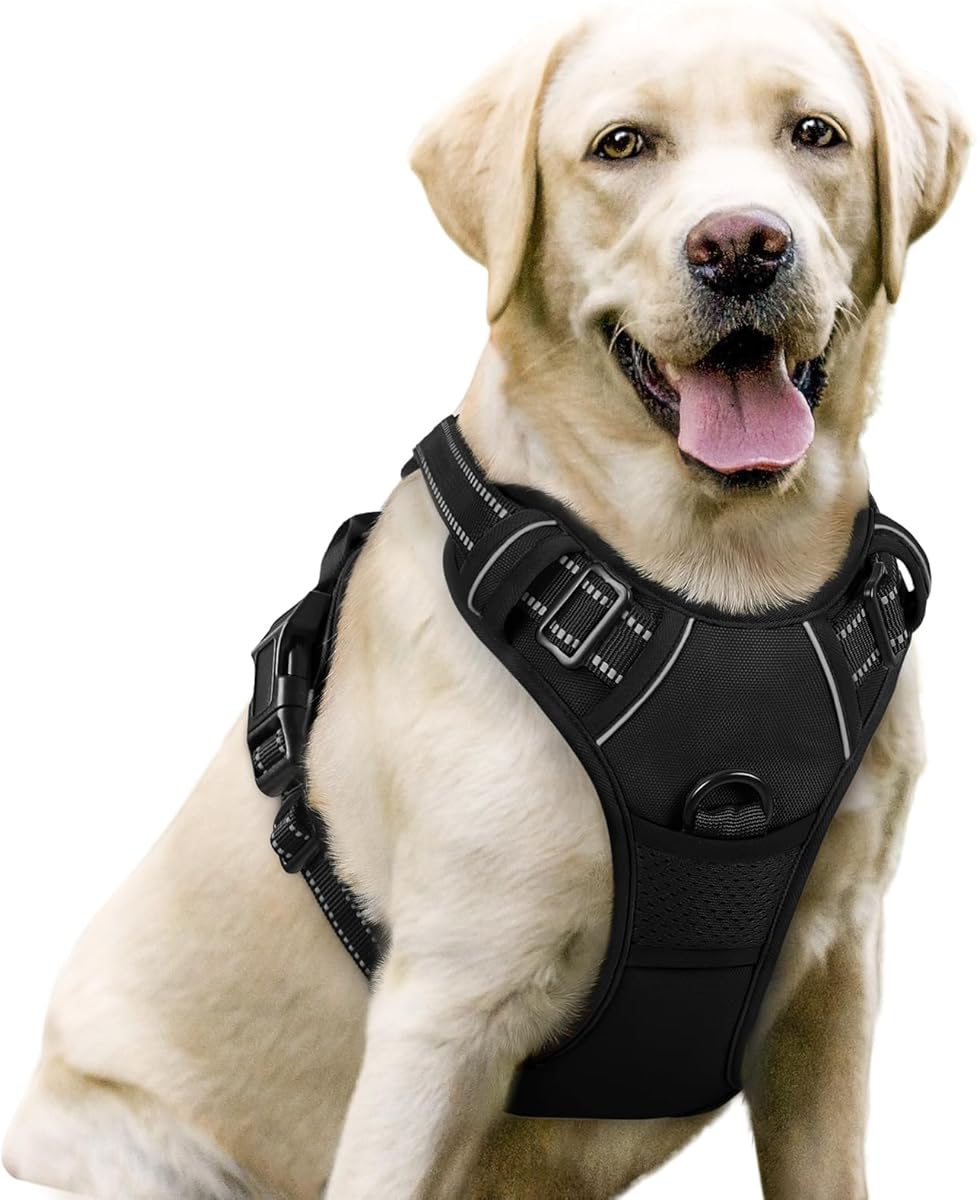
This popular harness offers two leash attachment points: a front clip for no-pull training and a back clip for relaxed walks. It’s adjustable at four points for a snug fit and has a padded vest design for comfort.
Pros:
- Four adjustment points for a customized fit
- Front and back clips for training versatility
- Reflective strips for safety
Cons:
- Can be tricky to adjust initially
- Not ideal for dogs who back out of harnesses
Voluas 7L Wireless Dog Water Fountain with 1 Filter, Stainless Steel

While not directly related to leash pulling, proper hydration is essential for energetic walks. This wireless water fountain encourages your dog to drink more, keeping them hydrated and healthy. The stainless steel design is easy to clean and hygienic.
Pros:
- Wireless and convenient, no cords to chew
- Stainless steel is durable and easy to sanitize
- Large 7L capacity for multiple pets
Cons:
- Requires regular filter changes
- Higher price point than basic bowls
What to Look For
When choosing gear to help with pulling, keep these factors in mind:
- Front-clip attachment: A front D-ring is key for no-pull training as it redirects your dog’s momentum.
- Adjustability: Look for harnesses with multiple adjustment points to ensure a snug, secure fit.
- Padding: Soft, padded material prevents chafing, especially for strong pullers.
- Durability: Heavy-duty stitching and hardware are important for large or strong dogs.
- Visibility: Reflective elements improve safety on low-light walks.
- Leash compatibility: A fixed-length leash (4-6 feet) is best for training; avoid retractable leashes.
FAQ
Q: What is the quickest way to stop my dog from pulling? A: The quickest method is to stop moving the moment the leash tightens. Stand still until your dog stops pulling and looks back at you, then reward and continue. Consistency is key; this teaches your dog that pulling gets them nowhere, while a loose leash earns forward motion.
Q: Are no-pull harnesses cruel? A: No, when used correctly, no-pull harnesses are humane and designed to discourage pulling by redirecting your dog’s momentum. They do not cause pain or injury if fitted properly. However, they are a training tool, not a substitute for teaching loose leash walking.
Q: Should I use a choke or prong collar to stop pulling? A: We do not recommend choke or prong collars as they can cause physical harm and fear-based behaviors. Positive reinforcement training with a no-pull harness or a well-fitted martingale collar is safer and more effective long-term.
Q: How long does it take to train a dog not to pull? A: It varies by dog, but with daily short sessions, many dogs show improvement in 2-4 weeks. Consistency and patience are crucial. Some dogs may take longer, especially if they have a strong pulling habit.
Q: Can I use a retractable leash to stop pulling? A: No, retractable leashes teach dogs that pulling extends the leash, which encourages pulling. A fixed-length leash (4-6 feet) gives you more control and helps teach loose leash walking.
Q: What if my dog pulls only when they see other dogs or squirrels? A: This is common. Practice the ‘watch me’ command and reward your dog for focusing on you instead of the distraction. Start at a distance where your dog can succeed and gradually decrease the distance. A front-clip harness can also help redirect their momentum.